Why Children Learn Best When They're Having Fun
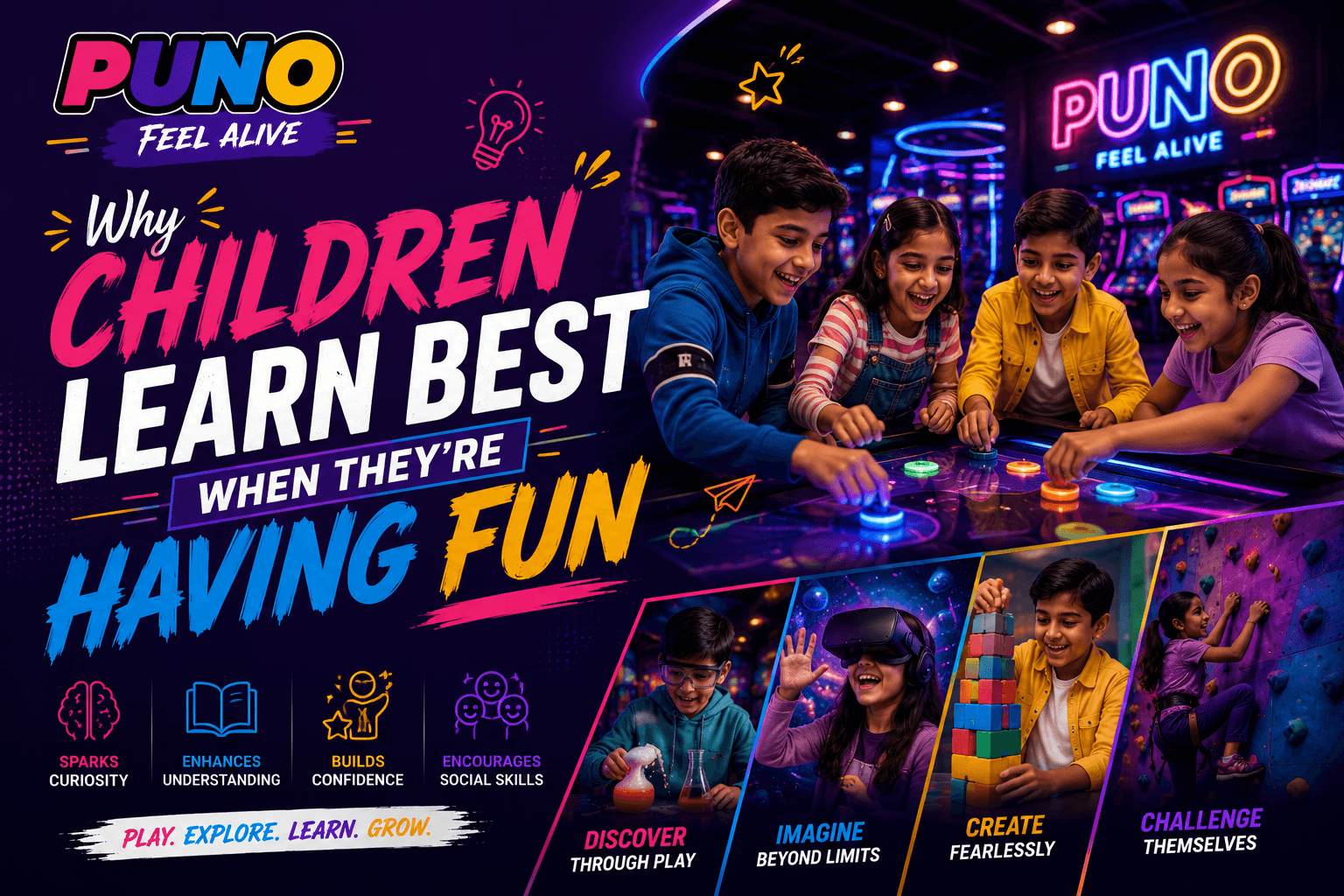
"Children learn best when they’re having fun because enjoyable experiences boost curiosity, engagement, creativity, and memory retention. Play-based learning encourages exploration, problem-solving, and confidence while making education feel natural and exciting."
Why Children Learn Best When They're Having Fun
At PUNO, we witness it every single day.
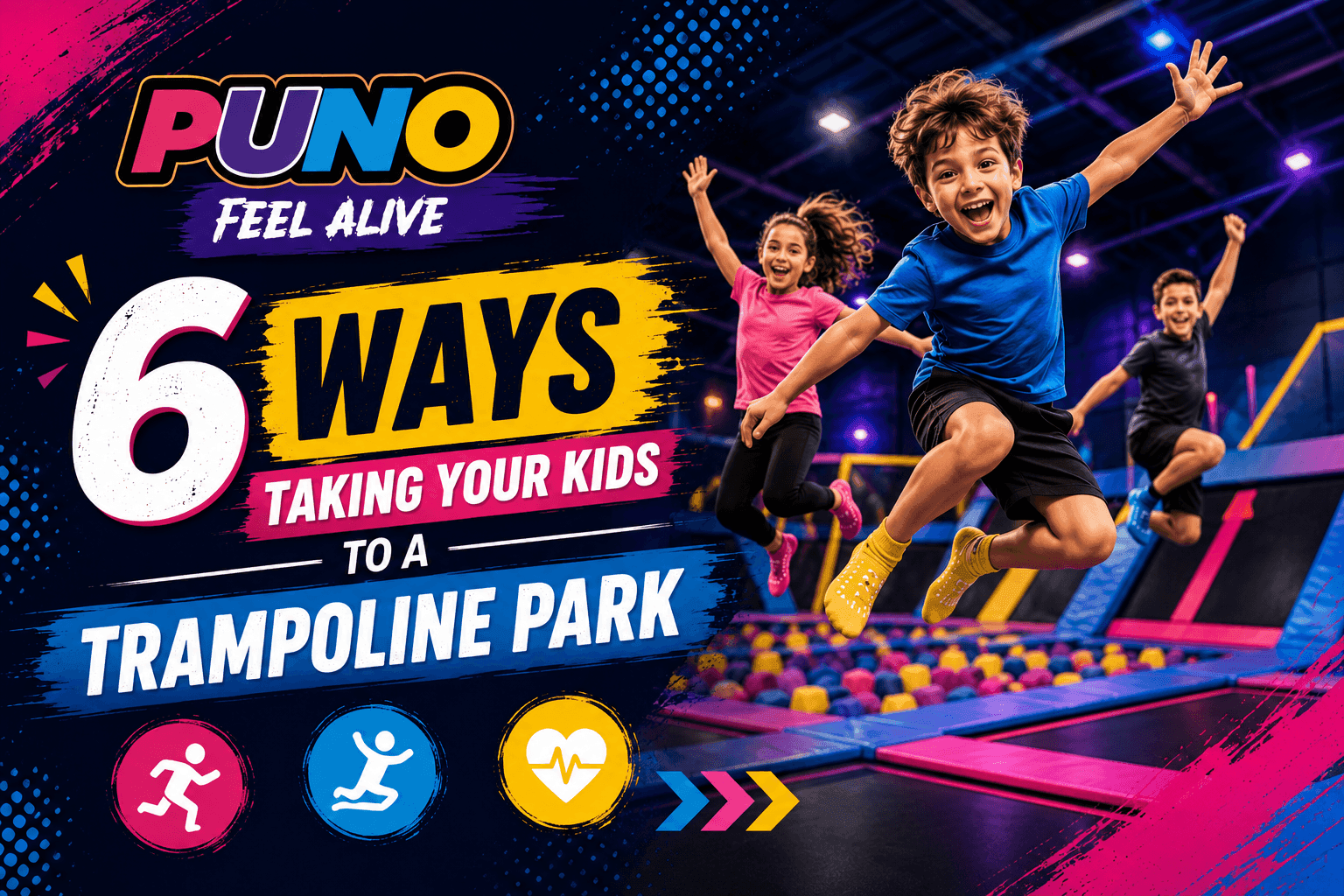
A child steps onto our glow-in-the-dark trampolines, and suddenly, they're not just jumping-they're discovering. They're testing their limits, figuring out how high they can go, learning to land, and building coordination with every bounce .
A group of kids navigates the Ninja Course, and they're not just playing-they're problem-solving. Which path works best? How do I balance? What happens if I try it differently? .
Children playing in our Junior Zone aren't just having fun-they're strengthening bones, building muscles, developing hand-eye coordination, and learning to share and cooperate with others .
Here's the thing: this isn't just observation. It's science.
What the Research Says
Psychologists who study children's learning have found something remarkable: children learn best through play . Not worksheets. Not flashcards. Play .
Dr. Kathy Hirsh-Pasek, a professor of psychology at Temple University and a leading expert on childhood learning, explains that the science is clear: we learn better when we're active, not passive. When we're engaged, not distracted. When something is meaningful to us .
And here's the shocker: we learn things better when it's joyful and not when it's boring .
According to research, children who are active and "minds-on"-mentally working on something-learn best. This happens when the material is meaningful to them and links to their lives and experiences .
The Six Principles of Playful Learning
Dr. Hirsh-Pasek and her collaborator Dr. Roberta Golinkoff identified six key principles for how children learn best. Children who are:
Active, not passive learners
Engaged with the material-behaviorally, emotionally, and cognitively
Meaningfully connected to what they're learning
Socially interactive with others
Iterative-building knowledge step by step
Joyful in the experience
This is what researchers call "active playful learning" .
The Skills Children Build Through Play
Play isn't just about having fun-it's about building essential life skills .
🧠 Cognitive Skills
When children play, they're naturally solving problems, which helps their brains grow . Play builds executive functioning skills-the process of how children learn:
Paying attention – focusing and ignoring distractions
Self-control – managing and regulating behavior
Problem-solving and mental flexibility – addressing challenges and shifting between tasks
Compared to direct instruction, guided play has been shown to have a greater positive effect on early math skills, shape knowledge, and task switching .
🤝 Social Skills
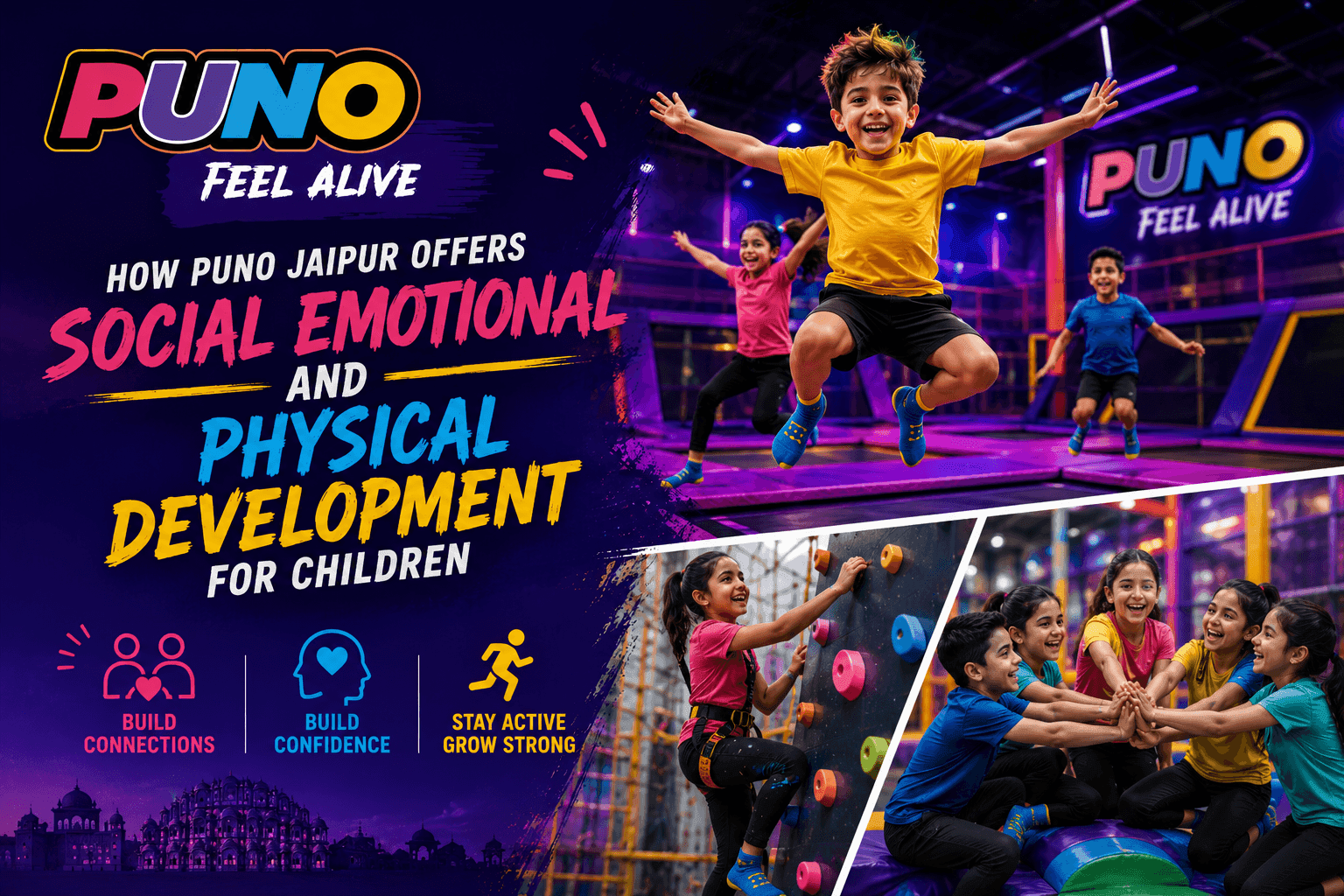
Through physical play, children learn to cooperate and negotiate with one another. They take risks in a safe environment and develop empathy because they're guided not to harm others .
Group activities help children develop teamwork, communication, and emotional intelligence-skills they'll use for the rest of their lives .
💪 Physical Skills
Play allows children to explore and make sense of their world while developing physical competence . From building blocks that teach balance and spatial awareness to trampolines that strengthen bones and muscles, physical play builds a foundation for lifelong health .
🗣️ Communication Skills
Pretend play activities encourage the use of more sophisticated language to communicate with playmates. Whether it's negotiating rules or inventing stories, play builds language skills naturally .
What This Means for Parents
The message from research is clear: play is essential for healthy development. Yet despite this, play remains a marginal feature in many learning environments where children spend most of their time .
In today's world, smartphones and laptops have shortened children's attention spans and increased moodiness . Kids are spending more time on screens and less time in actual social situations .
But here's the good news: you don't need a classroom to make learning joyful. You just need the right environment.
The PUNO Vibe: Where Learning and Fun Collide
At PUNO, we've designed every activity to support holistic child development-physical, cognitive, social, and emotional .
🏃♂️ Physical Development
Our trampoline zone isn't just fun-it's a full-body workout that strengthens muscles, builds coordination, and promotes physical fitness .
Our Junior Zone is specifically designed for children aged 3-7, with jumping, sliding, running, and rolling activities that use a child's complete body .
🧩 Cognitive Development
Our EPP Playzone includes problem-solving exercises and puzzles that test mental abilities . Building blocks let children be as creative as they can be, bringing their imaginations to life .
Arcade games build problem-solving skills, hand-eye coordination, and strategic decision-making . The Ninja Course challenges kids to overcome obstacles through creative thinking, building resilience and patience .
🤗 Social and Emotional Development
Team-play games like bowling and adventure challenges instill cooperation, communication, and leadership skills . At PUNO, children interact and play with each other in an extremely safe and controlled environment where they can positively aid each other in their development .
💛 Confidence Through Challenge
Activities like the Sky Stepper and Sky Wall let children conquer fears and build confidence. When they climb to the top and succeed, they learn something invaluable: "I can do hard things."