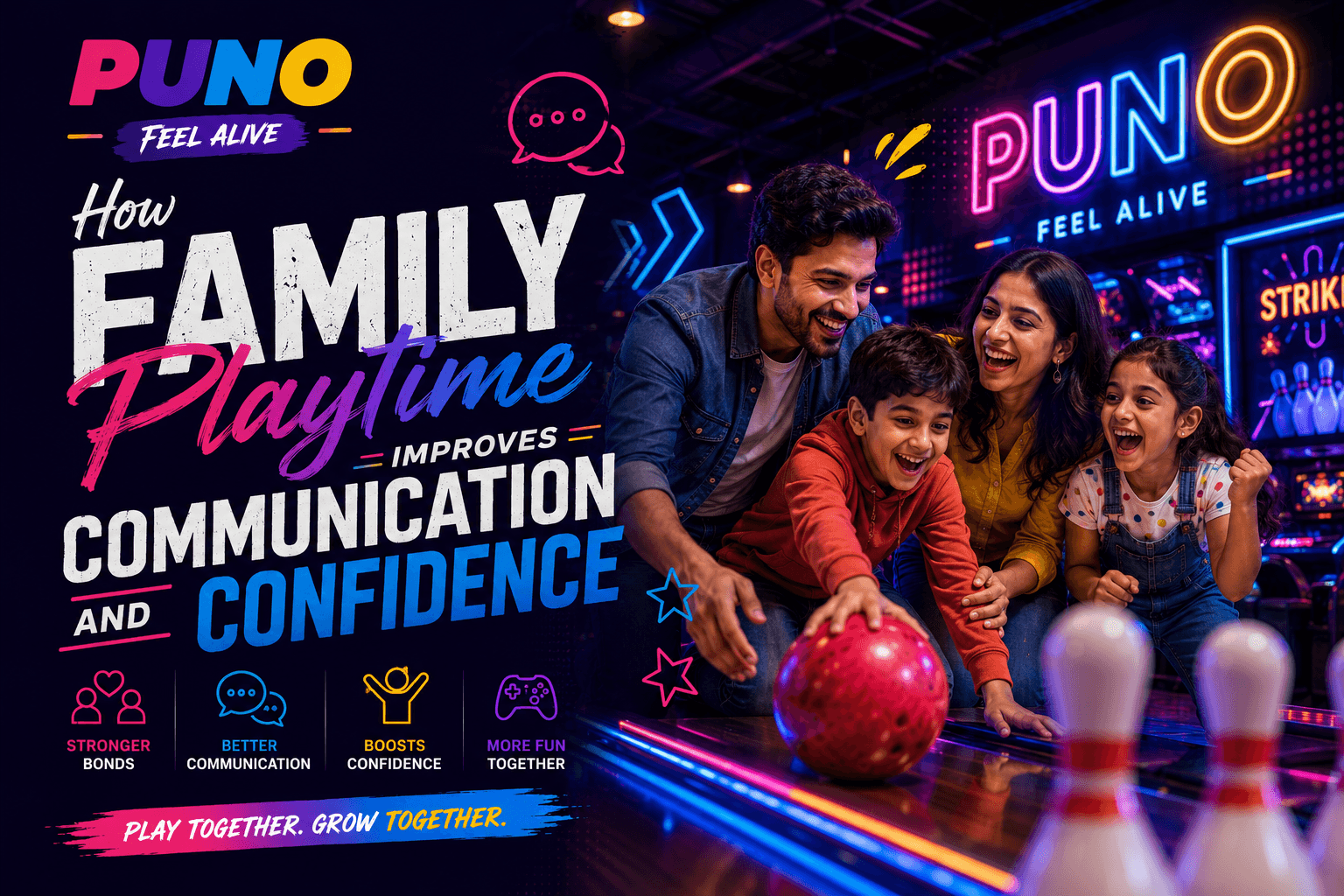
How Family Playtime Improves Communication and Confidence
"Family playtime strengthens communication, builds trust, and boosts confidence by encouraging teamwork, conversation, and shared experiences. These meaningful moments help family members connect, express themselves, and create stronger relationships."
How Family Playtime Improves Communication and Confidence
At PUNO, we witness it every single day.
A family walks in - parents looking a little tired, kids buzzing with excitement. They split up at first. Mom heads to the arcade with the older one. Dad takes the little one to the Junior Zone. Everyone's doing their own thing.
But then something shifts.
Someone spots the Swing Bridge. Or the Battle Beam. Or the augmented bowling lanes. And suddenly, everyone's together again. Cheering. Laughing. Competing. High-fiving.
By the time they leave, something has changed. The kids are beaming with pride. The parents are relaxed and smiling. And the conversations? They're flowing more freely than they have all week.
That's the magic of family playtime. And at PUNO, we've built an entire world around it.
🧠 The Science Behind Play and Connection
Play isn't just about having fun - though that's certainly a big part of it. When families play together, something profound happens in the brain.
Oxytocin, the "bonding hormone," is released during shared positive experiences . It's the same chemical that helps parents bond with their newborns. When you laugh together, cheer each other on, or celebrate a win, your brain is literally wiring you closer together.
Stress hormones drop when we play. Cortisol levels decrease, making everyone more relaxed and open. This is why conversations that feel impossible at the dinner table often flow naturally after a round of bowling or a shared adventure.
Mirror neurons fire when we watch each other. These are the brain cells that help us understand and empathize with others. When parents model confidence, resilience, and joy during play, children absorb those qualities effortlessly.
💬 Building Better Communication Through Play
At PUNO, we see families communicate in ways they rarely do at home.
The Junior Zone: Where Little Voices Find Their Strength
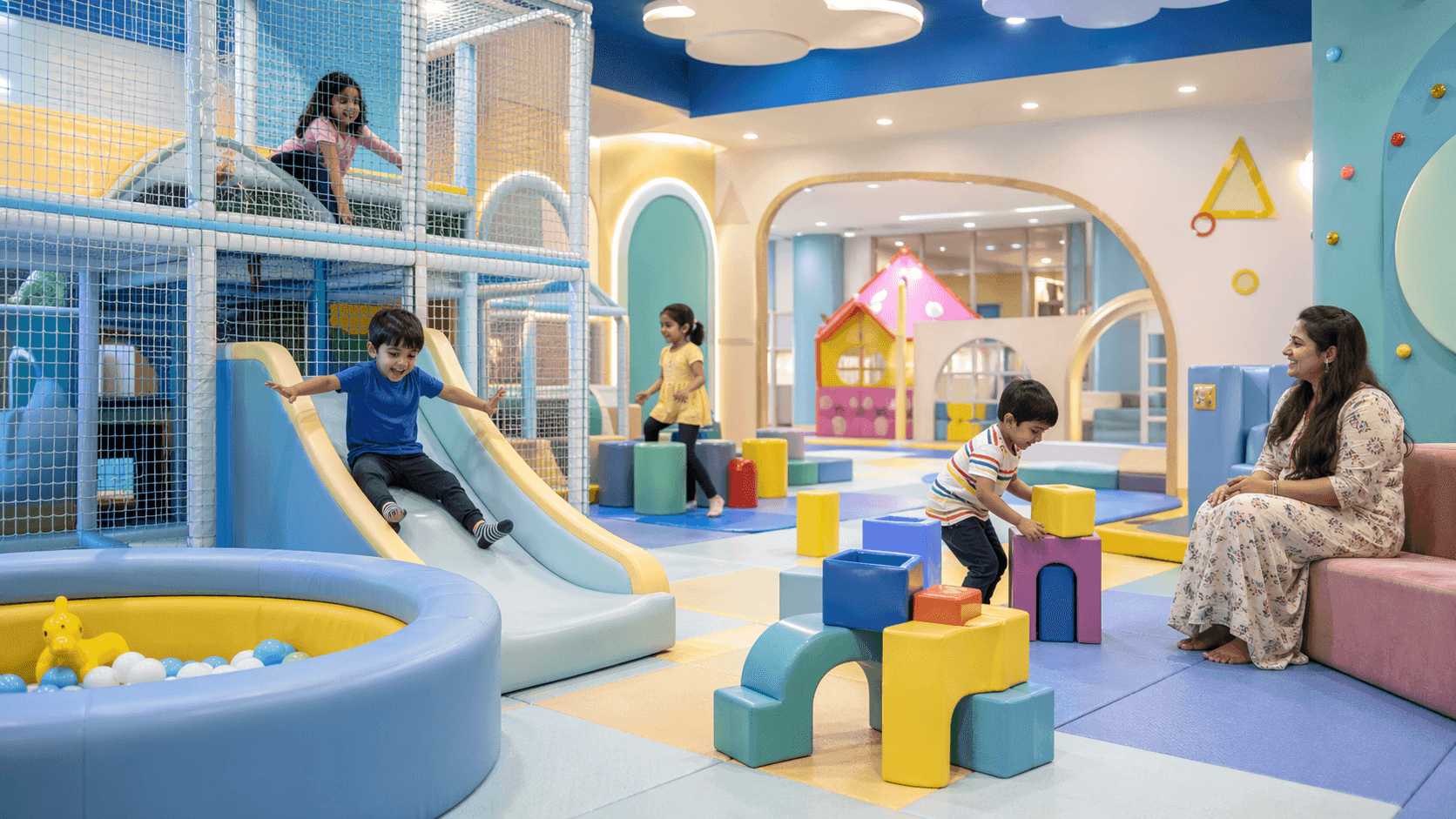
In our Junior Zone, toddlers and young children explore a wonderland of foam pools, ball pits, and kiddie cars . Everything is foam-padded to ensure zero risk of injury, allowing kids to take safe risks.
What we see: A child who's usually quiet at home suddenly announces, "Watch me, Mama!" before sliding down. A toddler who struggles with words points excitedly and shouts, "Ball!" in the foam pool. The safe, playful environment gives little ones the confidence to express themselves.
Why it works: When children feel physically safe and emotionally supported, they're more willing to try new things - including new words and new ways of expressing themselves.
The Sky Stepper: Facing Fears Together
The Sky Stepper is a test of courage. Kids (and adults!) must cross pillars aligned at different heights to reach the top . It looks intimidating. But with family cheering from below, something remarkable happens.
What we see: A child hesitates at the first pillar. Dad calls out, "You've got this! One step at a time!" Mom adds, "We're right here!" With each step, the cheers get louder. And when they finally reach the top? The pride in their eyes is unforgettable. The conversation afterward is filled with "Did you see me?" and "I was so scared but I did it!"
Why it works: Facing challenges with family support builds trust. When children know their parents believe in them, they internalize that belief . This translates to better communication and higher self-esteem in all areas of life.
The Swing Bridge: Teamwork and Trust
The Swing Bridge is pure, energetic fun . You must run across a swinging bridge while opponents try to knock you into a pit of colorful balls.
What we see: Siblings who argue at home become teammates. Parents and kids strategize together. "You go first, I'll distract them!" "No, let's go together!" The laughter is contagious. And when someone falls into the ball pit? Everyone cracks up - including the one who fell.
Why it works: Cooperative play builds shared memories and inside jokes . These become the foundation for open, comfortable communication long after the game ends.
Battle Beam: Friendly Competition
In the Battle Beam, kids compete with friends using foam swords to knock each other off a bridge . The ground is filled with foamy blocks to protect against injury.
What we see: Siblings who usually bicker learn to be gracious winners and losers. Parents model good sportsmanship. "Great try, buddy!" "That was so close - you almost got me!" The competitive fun creates a safe space for practicing communication skills like encouragement, negotiation, and handling disappointment.
Why it works: Play provides low-stakes opportunities for practicing emotional regulation and communication . When the stakes are low (it's just a game!), it's easier to learn how to handle big feelings.
💪 Building Confidence, One Bounce at a Time
Every activity at PUNO is designed to build confidence in kids and parents alike.
The Trampoline Zone: Freedom and Mastery
Our glow-in-the-dark trampolines let kids bounce, flip, and soar . Backlights and music transform the atmosphere into something magical.
What we see: A child who's hesitant at first tries a small bounce. Then a bigger one. Then a jump. Then a flip. With each success, their confidence grows. By the end, they're leading the way, showing Mom and Dad what to do.
Why it works: Physical mastery builds self-esteem. When children learn to control their bodies, they develop a sense of competence that carries over into all areas of life . The same goes for parents - feeling physically capable is empowering.
Sky Wall: Conquering the Impossible
The Sky Wall is a 90-degree straight wall with hurdles . It gives the same thrill as climbing The Great Wall from Takeshi's Castle.
What we see: A child who's never climbed before looks up and says, "That's impossible." But with encouragement, they try. They climb a little. Then a little more. And suddenly they're at the top. The look of triumph on their face? Pure magic.
Why it works: Overcoming physical challenges builds resilience. Children learn that "I can't" sometimes means "I haven't tried yet." This mindset - that effort leads to success - is the foundation of lifelong confidence.
Ninja Course: Problem-Solving Under Pressure
From giant rolling balls to swaying beams, the Ninja Tag arena challenges kids to think creatively and overcome obstacles . Builds resilience, patience, and pressure-resistant thinking.
What we see: A child encounters an obstacle they can't get past. Instead of giving up, they try a different approach. And another. When they finally figure it out, the victory is even sweeter.
Why it works: Play-based problem-solving develops executive function skills — planning, focusing attention, and adapting to new situations . These are the very skills that lead to success in school and life.
VR Gaming: Confidence in Virtual Worlds
The Vex Adventure arena lets players freely roam while specially designed armor suits capture their interactions and flying virtual bullets . Hand recognition, vibrating vests, and vibrating floors deliver hyper-reality.
What we see: A child who's nervous about trying new things dives into a virtual world and excels. The immersive experience is so engaging that they forget to be afraid. They're making decisions, solving problems, and taking risks - all in a safe, controlled environment.
Why it works: Virtual success builds real-world confidence. When children see themselves as capable and brave in one context, that self-perception carries over to others .
🍔 Recharging Together: The Food Connects
After all that activity, families gather at our Hunger Station/Chool Restaurant . The food is tasty, of good quality, and reasonably priced.
What we see: Families sitting around tables, sharing meals, and reliving the best moments of the day. "Remember when I did the Sky Wall?" "Did you see me beat you at bowling?" The food is good, but the conversation is even better.
Why it works: Shared meals are one of the most powerful tools for family communication. When the screen are away and everyone's relaxed, conversations flow naturally . The shared memories from the day give everyone something to talk about.
The PUNO Vibe
We've designed PUNO to be a place where families can step away from screens, step into adventure, and step closer to each other .
Over 30 activities mean there's something for every age and every comfort level . Toddlers have their own safe space in the Junior Zone. Older kids and adults can challenge themselves on the Sky Stepper, Donut Slide, and Battle Beam . Everyone can join forces in augmented bowling, arcade games, and the VR zone.
Trained staff ensure that all equipment is maintained and all safety guidelines are followed. Parents can relax, knowing their children are safe.
Flexible party packages make it easy to celebrate birthdays, anniversaries, or just a Wednesday that needed some fun. Let someone else handle the chaos while you focus on connection.